Which is better? Older or newer homes?

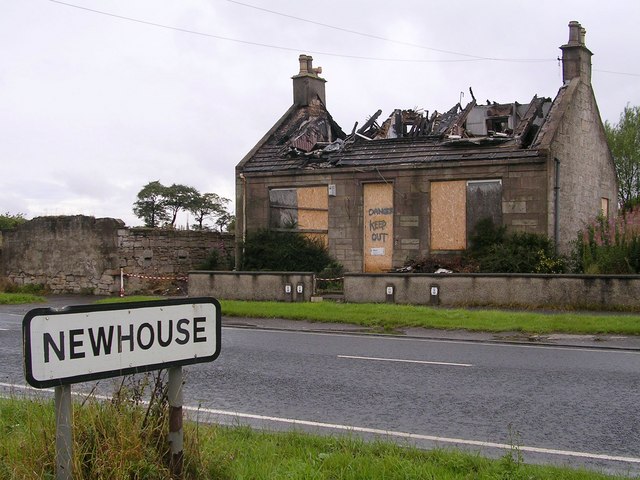
I often get asked by buyers if they should buy an older house or a newer house. My usual response is to say that it depends on what kind of problems they want to have. I get crazy looks when I say that, but it is just my way of telling them that all houses will have problems. If you don’t have one now, just wait because your newer house will become an older house quicker than you think. Basically, it is your house verses Mother Nature and Father Time……and those parents usually win.

I have lived in both older and newer houses all my life. When I was a kid, I went from a 1910ish four square to a 3-year-old ranch. Next, my parents bought a house in Kenwick  from the 1930s. My first house was built around 1915. My second was 1973. Then from 1997 and 1986, plus a collection of rentals built from the 1940s through 2006. All of them had things to deal with. 

There seems to be this misconception that old houses were built better. True, MOST were built with more care than today’s homes are. I say most because my first house, the one built around 1915, was nowhere near as well-built as my parent’s Kenwick house from the 1930s. I thought it would be, but once I moved in, I started to realize it wasn’t.

Old House misconception #2 has to do with today. Many people think that any older house is better than any newer house is today. After living in a lot of older houses and showing a bunch to my clients, I can tell you that what it comes down to is maintenance. Even the best built house from yesterday will be nothing but trouble today if somebody didn’t keep it up. Remember, an older house has been in the ring with Father Time for more rounds than a newer house will have.

Here are some of the common old house issues: Inadequate electrical, plumbing, insulation, lack of maintenance, and poorly done improvements to any of those prior items.

Newer house issues: Rushed construction by unskilled/uncaring workers sums it all up the best. I have a friend whose house was practically rebuilt after a fire. It had no insulation on one side of the house because the drywall contractors showed up before the insulation contractors were done. On my house from 1997, poor mortar joints on a brick window sill allowed water to run down the inside of the brick veneer and rot some of the sill plate. I only found it out when I did the demo for a new floor in 2010 when it was only a 13 year old house. If today’s workers would apply to their trade the same care they use to draw naked women in their potapotties, we would have the best built houses of all time!

Occasionally I do see both a really well-built newer home and a fantastic older home. I represented a builder who did a great job of making decisions that the buyer wouldn’t even begin to appreciate for years to come. He did a lot of little things way above minimum code. I also just sold an older house that had been well maintained and had recently been overhauled by a good contractor. That combination made it a pretty unique older home and a good pick…..I guess that buyer got the best of both worlds and none of the negatives!

Best advice when buying a home

It is amazing to me to think about the extreme markets I have seen.

I spent most of 2011 until COVID giving advice based on my experience of seeing how hard it was to sell ANY house during the Great Recession.

I think I will spend the next decade giving advice based on my experience of seeing how easy it was to sell ANY house right after COVID.

We are now back to a more normal market. Inventory is up a little, but seems really high compared to the days of only 3-4 houses being on the market in any price range.

I recently had an out of state buyer. It is always fun when somebody rolls into town with a mission of finding a house. I get to literally see almost any house worth considering, and all within a few days.

I sorted through about 90 houses in their price range. I narrowed it down to about the best 15 houses. Man, it sure was nice to be able to do this. I haven’t been able to do so in many years. Just not too long ago, there were not 90 houses for sale in all prices ranges in the whole Bluegrass area.

Many from this list were new listings. Most sold immediately. We ended up finding an ideal home that was clearly the nicest in it’s price range since there were multiple offers. After going over the list price, waiving inspections and paying cash, I am happy to say it closed last week.

The whole time I was out with these buyers, I was thinking about those other 75 or so houses for sale. I am sure none of them had back to back showings like practically every house I showed my clients. A couple of years ago, any of those houses would have gotten multiple offers the first day and possibly sold for over the list price…….but not today. Today they are nothing anybody wants. They all had some bigger negative like being on a busy road, in poor condition, a bad lot, etc.

Which takes me back to some timeless advice I have been giving for years: Buy a house that will be easy to sell in a bad market. Buyers in any market all want the best house available to them. I remember getting multiple offers on listings in 2009 when there were literally hundreds of houses available to those buyers who all wanted my listing. What house is that? One with a good floor plan. One with a good lot. One that is in a desirable location. One that fits into it’s neighborhood nicely. One that has no big negatives. One that has at least one unique feature that gives it a little pizzaz. How will you know this house when you see it? Take me along and I will let you know.

How I learned a great real estate lesson from a video game

Ever play Sim City? I must admit, I haven’t done it in like 30 years, but I always loved to watch what happened when you built a neighborhood beside an industrial zone, or watch a neighborhood grow when you added a commercial district beside it.

Sim City is a lot like real life in the way something outside a neighborhood can have an impact on what happens within a neighborhood. 

One day many many years ago, I was talking to a neighbor who bought her house brand new back in the early 70’s. We were talking about all the traffic on Pimlico Parkway. She told me that before they opened Man-O War, the only traffic on Pimlico Parkway was just people from the neighborhood. It was just the main drag through the neighborhood, like any other entrance and exit  in your neighborhood…..until something changed.

And I guess that is what is on my mind. How things are always the same, until something changes.

Another example of a road like this is Autumn Ridge Blvd. I remember when it was a new neighborhood. You took Autumn Ridge all the way back, turned on Pleasant Ridge just like you do today, only back then it ended before you got to Andover Forest…..and oh, there was also no Hamburg back then either.

Next thing you know, Hamburg is built and you can get to it straight through Autumn Ridge. It really worked out great for everybody….except those folks that lived on the cut through streets.  They saw a lot of traffic and watched as their houses became less desirable than the same house on a different street in the neighborhood.

So, here is my advice: Don’t buy a house on a road that ends at an undeveloped area.  SOMETHING will eventually be there….just like on Sim City, and odds are it will change the vibe of your neighborhood. Sometimes it changes it in a good way, but most of the time it means increased traffic, which usually means increased crime…..just like Sim City.

Here is some more advice: When you are considering a neighborhood that has roads like that, take a look at a satellite view of the neighborhood. You want to see what is on the other side of the vacant land to see what may eventually be connected to your neighborhood. Also, don’t rely on zoning. I hear people say things like, “Oh, that is zoned for single family, so we’ll be okay.”  Well, lets say that it stays zoned as such. That doesn’t mean that it will be a single family neighborhood similar to your neighborhood? But even more of a big deal is that there are zoning changes all the time.

And you know what usually happens when there is a big change in the neighborhood don’t you?  All your neighbors decide to move at the same time.  Never a good thing for resale value……and Game Over for you!

AVOID houses with these issues

There are 3 things that are never good to see when you view a house.  Since I have a drafting/building material/architectural/construction/landlord background, I tend to always be in mini-home inspection mode when I look at houses with my clients.

I absolutely hate to see cracks in the brick that have been repaired multiple times.  I don’t know if you have ever seen this, but it also can happen to a concrete block wall.  It is where somebody filled in the crack, the crack came back, then it was filled again……….maybe over and over again.  You can tell because often the colors of the caulk or mortar are different.  The bottom line is that the house has movement.  That isn’t going to go away and can’t really be fixed totally.  Yeah, there are expensive things that can be done, but not of them can make it all good again.

Another thing I hate to see is when the seller has gone to great lengths to direct water away from the house.  Sure I appreciate the effort, but that tells you that the house has a big annoying problem.  You know this when you see big black corrugated drain pipe running all around the house.  Maybe if the driveway is right beside the house there will be globs of caulk at the joint.  To me, that just tells me there has been water in the basement before.

I have a house that fit this bill, but I did some permanent fixes.  I say permanent because running drain pipe all over doesn’t really change the way surface water runs to the house.  It just deals with the water running off the roof.  After trying all these cheap fixes and still getting water in the basement, I went into overdrive.  I had the basement water proofed.  That kept water out of the inside of the house, but didn’t keep the water from eroding the soil under and around my foundation.  So, I hired a dude with a Bobcat and a dumptruck to regrade the backyard so surface water ran around my house instead of through it.  I also installed the one piece gutters that don’t clog, buried the downspouts and ran them where they wouldn’t be anywhere near the house.  Since I had one corner that I couldn’t really create positive drainage, I made a valley so that water would run parallel to the house.  Now my neighbor’s basement leaks instead of mine.  I hate that for him, but the reality is that if my house had been graded properly when built, he’d have gotten a lot of it anyway.  It has been over 17 years since I did all that and there has never been another issue.

 You may ask why I tell people to run when this happens if I fixed it in my own home.  The reason is because I think people should feel a sense of peace while they are in their home.  I did all this, but every time it rained hard or the ground was saturated, I was a nervous wreck.  See, the sump pumps could fail or we could have that one time where all my engineering can’t handle the amount of water.  I rent this house out now, but I still worry about it.  That isn’t the homeownership experience I want for my folks!

The next thing that can tell you a lot about the history of a house, even if the seller said in the disclosure that the basement is dry, is when you go down there and they have everything up on pallets.  Or maybe the washer and dryer are sitting on bricks.  People always do that when there has been water in the basement.  See, some sellers feel like if the basement only has a little water, or it only happens every once in a while, that you won’t mind when it happens to you!

These are the 3 things that always make me give a house a thumbs down.  I’d rather see a roof past it’s expiration date, or a furnace that is an antique than any of these.  Water and soil stability issues usually end with nature winning in its battle with man.

Thinking outside the house

Ever wish somebody would tell you EXACTLY what to do to make sure you buy a house that will always be a good investment?  This is something that nobody was thinking about the past few years.  During COVID and the “Never gonna happen again” low interest rates, all houses were selling quickly and for top dollar……many sold for more than they were worth.

Here is my list of what to find in your next house.  The more of these you have, the better your chance of getting a house that will be a wise investment.  Remember, as long as there is a real estate market, people will always buy the best houses that are on the market!

LOCATION:  You hear a lot about this in Real Estate.  A good location really just means that it is convenient to SOMETHING or has a unique asset!  It can be shopping, the airport, the interstate, schools, a park…..really just anything unique or desirable.  A house probably doesn’t have a good location if you find yourself thinking, “Gee, other than being nowhere near anything, that house is great!”  A neighborhood like that will always have to sell on value since it offers nothing else.

SCHOOLS:  Buy in an area that has at least average performing schools.  People moving within Lexington seem to be fine with any decent school.  Out of town buyers always want to be in the best school district.  Look for an area that has a well rounded mix of elementary, middle and high schools.

NEIGHBORHOOD:  New is nice, but established is always better.  Pick a neighborhood that is large enough to not be negatively impacted by the surrounding ones.  Usually a cheaper larger neighborhood will bring down a smaller nicer one.  The opposite holds true too.  Kenwick used to be an inexpensive area.  It was surrounded by Fairway, Ashland Park and Bell Court.    Its location and surrounding neighborhoods started putting it on people’s radar in the 1990’s.  You also want a neighborhood that has it’s own distinct identity.  I don’t mean it has to have giant columns at the entrance with the name chiseled in stone.  Chevy Chase doesn’t have anything that says “You are now entering Chevy Chase”, but you know you are there.  That is identity.  If an area doesn’t have an identity, then it isn’t known for any of the items I am talking about here.

LOT:  Ideally, you want to have a lot that is located well within the perimeter of the neighborhood.  That insulates the impact from inferior areas that border your neighborhood.  While I am on lots, get one that is at least typical in size, shape and contour for the neighborhood.  You don’t want one that isn’t.  It will turn away a lot of buyers……unless there is another frenzy at the time you go to sell.

FLOOR PLAN:  You want a house that has a useable layout and typical sized rooms.  A tiny kitchen in a 4 bedroom house will not bring in as much money.  You’d need to price it lower than the competition or upgrade it to make somebody be willing to overlook it.  If you find yourself saying things like “If it wasn’t for______, that house would be perfect!”, then you know the person looking at houses when it is your turn to sell it will say the same thing.   In a slower market, buyers get very picky. In a fast market, everything sells.

Basically, the goal is to get a house that will be someone’s top pick when it comes time to sell.  I call this ‘Thinking Outside the House.”  Most buyers just want to find a house they like.  The reality of Real Estate is that a lot of a house’s value is determined by things outside of the house itself.