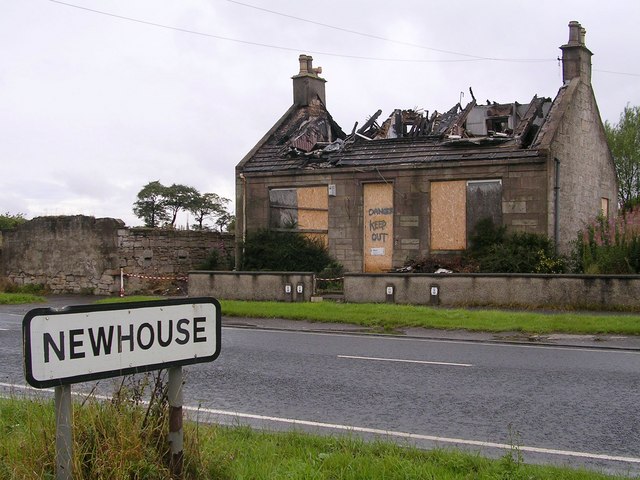
Which is better? Older or newer homes?

I often get asked by buyers if they should buy an older house or a newer house. My usual response is to say that it depends on what kind of problems they want to have. I get crazy looks when I say that, but it is just my way of telling them that all houses will have problems. If you don’t have one now, just wait because your newer house will become an older house quicker than you think. Basically, it is your house verses Mother Nature and Father Time……and those parents usually win.

I have lived in both older and newer houses all my life. When I was a kid, I went from a 1910ish four square to a 3-year-old ranch. Next, my parents bought a house in Kenwick  from the 1930s. My first house was built around 1915. My second was 1973. Then from 1997 and 1986, plus a collection of rentals built from the 1940s through 2006. All of them had things to deal with. 

There seems to be this misconception that old houses were built better. True, MOST were built with more care than today’s homes are. I say most because my first house, the one built around 1915, was nowhere near as well-built as my parent’s Kenwick house from the 1930s. I thought it would be, but once I moved in, I started to realize it wasn’t.

Old House misconception #2 has to do with today. Many people think that any older house is better than any newer house is today. After living in a lot of older houses and showing a bunch to my clients, I can tell you that what it comes down to is maintenance. Even the best built house from yesterday will be nothing but trouble today if somebody didn’t keep it up. Remember, an older house has been in the ring with Father Time for more rounds than a newer house will have.

Here are some of the common old house issues: Inadequate electrical, plumbing, insulation, lack of maintenance, and poorly done improvements to any of those prior items.

Newer house issues: Rushed construction by unskilled/uncaring workers sums it all up the best. I have a friend whose house was practically rebuilt after a fire. It had no insulation on one side of the house because the drywall contractors showed up before the insulation contractors were done. On my house from 1997, poor mortar joints on a brick window sill allowed water to run down the inside of the brick veneer and rot some of the sill plate. I only found it out when I did the demo for a new floor in 2010 when it was only a 13 year old house. If today’s workers would apply to their trade the same care they use to draw naked women in their potapotties, we would have the best built houses of all time!

Occasionally I do see both a really well-built newer home and a fantastic older home. I represented a builder who did a great job of making decisions that the buyer wouldn’t even begin to appreciate for years to come. He did a lot of little things way above minimum code. I also just sold an older house that had been well maintained and had recently been overhauled by a good contractor. That combination made it a pretty unique older home and a good pick…..I guess that buyer got the best of both worlds and none of the negatives!

Can it be both a Seller’s Market & a Buyer’s Market?

I was on the phone with a good friend of mine who is an agent with my office. As usual, we got to chatting about what the market is like right now.

I said that it seems like we are back to a more normal market where the best of the best listing are still going fast and sometimes for over the list price, while everything else is just sitting on the market waiting for a buyer to even notice it is for sale.

I then when on to postulate that this was due to the COVID market. Back then, the new listings of the day were the pending sales of the next day. Instead of Days on the Market, it was more like Hours on the Market. Every house seemed to sell immediately so there was no need to keep mental track of what was on the market. I think that got buyers and their agents in the habit of only looking at new listings and those with fresh price reductions. If a buyer or their agent wasn’t impressed with the house when it was a new listing or had just gotten a price reduction, it is like it disappeared. It was forgotten forever. It has always been hard to get people to revisit a stale listing, but it got even harder after COVID.

I think I went on and on for a little while longer. Then my good friend said he had heard somebody say this about the current market: “The first 10 days a house is on the market, it is a Seller’s Market. After that it is a Buyer’s Market.”

I told him I thought this was an incredibly simple way of explaining where and why the market is where it is right now. Then I went on to tell him that with me being so wordy, I would probably take 500 words to explain that to somebody……..which I apparently did in only the first 225 words of this post!

Last nail in the coffin for the Pandemic era market

All throughout real estate history, we have had value differences due to location. Similar houses in the best locations got top dollar and the less desirable locations were worth less.

Except for the COVID era market.

During the pandemic, supply was so short and demand was so strong that pretty much the same house would sell for the same price regardless of things like what part of town it was in, what school district it was in, and even what condition the house was in.

This was especially true for the more affordable houses. Back then, a small 3 bedroom, 1 bath house without a garage was going for about $200k regardless of whether it was in a Grade A, Grade B or Grade C location. That was because the market was so tight that people didn’t have a choice in location. Buyers were shopping all over town, looking at any house in their price range. There were so many buyers doing this that location didn’t seem to matter much. It was about getting a house, not getting a house where you want it to be.

We’re not wearing masks. Rates aren’t 3%. That crazy market is in the past now.

Now that we are starting to see some houses staying on the market for more than a few hours, it’s back to location being important. As this happens, I think we will see the Grade A neighborhood prices remain stable. The Grade B and Grade C locations that recently had been getting the Grade A money…..well, they aren’t any longer. That is one reason we are seeing so many price reductions now. It just shows that the market is returning to normal. It isn’t crashing.

Back during the pandemic, I would have people ask me what a house was worth. I would tell them I can easily determine what it is worth, but the value and the sale price were not related for that brief time. I would tell my Buyers to view the sale price as paying what the house was worth plus a “Convenience Fee” for winning the house in multiple offers. Now that we aren’t seeing multiple offers on every single new listing, we are back to a house’s value and its sale price being the same.

The wrong way to make housing more affordable

I keep seeing a bit of enthusiasm in the media regarding the market softening to the point that real estate prices will drop.

With the logic of a 5 year old, sure, it makes sense that lower prices make things more affordable. There are however more variables that go into a mortgage payment. There is the price you pay, your interest rate and the length of your loan. There is another variable independent of real estate and that is wages. I read this morning that wages are going up as workers are demanding more income to combat inflation. I predicted this. Inflation came first and hurt all of us. I knew that in time, wages would have to go up as well. I used to have a lawn care business when I was younger. I remember a customer who built their house brand new in the 1960s. They told me their payment was something like $160 a month and some months it was hard to make ends meet. We laugh at that payment today, but keep in mind that it was probably still about 30% or more of their income.

Let’s say that we all wake up tomorrow and real estate prices have dropped 20%. Yay affordability!! It won’t make a bit of difference. Why? Having lived through the Great Recession, I can tell you that Buyers will not view this as an opportunity. They will be afraid to buy. The self claimed shrewd Buyers will try to time the market and wait for prices to go down more. Those Buyers usually end up waiting so long that prices have started to rebound before they feel comfortable to pull the trigger.

Let’s also take into consideration what softening real estate prices will do to those who already own a home, which ultimately affects everybody. For most middle class folk, their home is their greatest asset. If they feel good about the value of their home and their job security, they will go out and spend their money. They take vacations. They go to Lowe’s and Home Depot. They buy furniture. They spend on landscaping. It’s good for the whole economy. They stop all that when the value of their home goes down. How do I know? I saw it from 2007-2011.

What is the solution? Build more houses. We have been in a housing shortage since the Great Recession ended. Yes, people right now are not moving since they got super low rates that don’t exist anymore. That is keeping prices high in these times of higher rates. But think back. When rates were super low and everybody was eager to buy houses, we still didn’t have enough houses available.

And if you think affordability and low inventory are bad now, just wait until rates drop down to around 6% or hopefully less. That will create a bit of a frenzy. There will be even more bidding wars and prices will continue to go up, making housing less affordable.

Reading the tea leaves when your house isn’t selling

House not selling? Wondering how to interpret what is going on? Here are a few of my thoughts on some common situations. The following assumes your house is being presented well online with plenty of good pictures and marketing remarks that describe it with more than trendy generic AI generated verbiage.

The house that gets lots of showings but no offers

Assuming that you don’t have some negative that wasn’t obvious like backing to a highway, apartments, or having an Eiffel Tower looking electrical thing in your yard, this situation simply means that the house doesn’t live up to what buyers expected. The good news with this one is that buyers think the price for what they thought the house would be is okay or else they wouldn’t come at all. The solution here is to either lower the price or improve the house so that it meets the expectations buyers have. Whichever is easiest.

I once had a condo that got tons of showings. I kept encouraging the seller to paint. Once we did, it sold. I recently had another listing that was getting tons of showings. It was a nice place, but just felt like a 15 year old house that needed a fresh vibe. The seller did some painting and replaced the flooring in all the bathrooms. As soon as it was done, it sold. Both of these places looked great online, and just needed to match what buyers thought they were getting. Both were improved for far less than the price reduction we would have needed, so both sellers actually came out better by going that route.

The house that gets no showings

This one is easy, but hard for sellers to accept. The price is too high. If a house is presented well on the MLS, and still nobody comes to see it, all you can do is lower the price. Real estate is all about price, location, and condition. You can’t change the location, but the other two you have some control over.

Also something to think about is this: If you have a $400k house and you’re asking $475k for it, buyers are comparing it to other houses that are really worth the asking price. The buyers who are going to spend what your house is really worth aren’t even going to see it since the list price is over their budget.

The house that gets the same bad feedback over and over

This is the least fun thing that can happen to a seller. I mean, they get kicked out of their house for showing after showing with no offers AND get to hear what people hate about their house.

Several years ago I had this really cool older house that had been mostly remodeled. It had the smallest living room I have ever seen……must have been the smallest anybody had ever seen since that is all I kept hearing after the showings. I’d ask for feedback and the buyer’s realtor would go on and on about how beautiful the place was, how unexpected it was to have walk-in closets in such an old house….then they would say their client wasn’t going to buy it since the living room was so small.

We tried putting in smaller scale furniture, but that didn’t help. After that, all we could do was drop the price. A price reduction opens the house up to a larger pool of buyers as well as enticing them to overlook a shortcoming if they are getting a better deal. We got that one sold too.

If you have a situation that doesn’t fit into these scenarios, give me a shout and I’ll let you know what to do.