
Which is better? Older or newer homes?

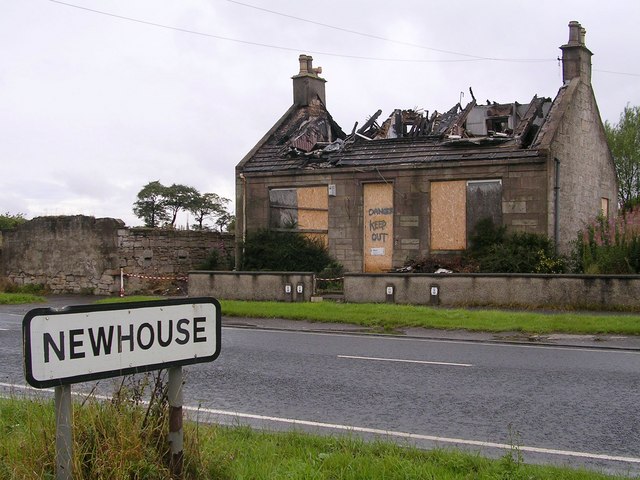
I often get asked by buyers if they should buy an older house or a newer house. My usual response is to say that it depends on what kind of problems they want to have. I get crazy looks when I say that, but it is just my way of telling them that all houses will have problems. If you don’t have one now, just wait because your newer house will become an older house quicker than you think. Basically, it is your house verses Mother Nature and Father Time……and those parents usually win.

I have lived in both older and newer houses all my life. When I was a kid, I went from a 1910ish four square to a 3-year-old ranch. Next, my parents bought a house in Kenwick  from the 1930s. My first house was built around 1915. My second was 1973. Then from 1997 and 1986, plus a collection of rentals built from the 1940s through 2006. All of them had things to deal with. 

There seems to be this misconception that old houses were built better. True, MOST were built with more care than today’s homes are. I say most because my first house, the one built around 1915, was nowhere near as well-built as my parent’s Kenwick house from the 1930s. I thought it would be, but once I moved in, I started to realize it wasn’t.

Old House misconception #2 has to do with today. Many people think that any older house is better than any newer house is today. After living in a lot of older houses and showing a bunch to my clients, I can tell you that what it comes down to is maintenance. Even the best built house from yesterday will be nothing but trouble today if somebody didn’t keep it up. Remember, an older house has been in the ring with Father Time for more rounds than a newer house will have.

Here are some of the common old house issues: Inadequate electrical, plumbing, insulation, lack of maintenance, and poorly done improvements to any of those prior items.

Newer house issues: Rushed construction by unskilled/uncaring workers sums it all up the best. I have a friend whose house was practically rebuilt after a fire. It had no insulation on one side of the house because the drywall contractors showed up before the insulation contractors were done. On my house from 1997, poor mortar joints on a brick window sill allowed water to run down the inside of the brick veneer and rot some of the sill plate. I only found it out when I did the demo for a new floor in 2010 when it was only a 13 year old house. If today’s workers would apply to their trade the same care they use to draw naked women in their potapotties, we would have the best built houses of all time!

Occasionally I do see both a really well-built newer home and a fantastic older home. I represented a builder who did a great job of making decisions that the buyer wouldn’t even begin to appreciate for years to come. He did a lot of little things way above minimum code. I also just sold an older house that had been well maintained and had recently been overhauled by a good contractor. That combination made it a pretty unique older home and a good pick…..I guess that buyer got the best of both worlds and none of the negatives!

How I learned a great real estate lesson from a video game

Ever play Sim City? I must admit, I haven’t done it in like 30 years, but I always loved to watch what happened when you built a neighborhood beside an industrial zone, or watch a neighborhood grow when you added a commercial district beside it.

Sim City is a lot like real life in the way something outside a neighborhood can have an impact on what happens within a neighborhood. 

One day many many years ago, I was talking to a neighbor who bought her house brand new back in the early 70’s. We were talking about all the traffic on Pimlico Parkway. She told me that before they opened Man-O War, the only traffic on Pimlico Parkway was just people from the neighborhood. It was just the main drag through the neighborhood, like any other entrance and exit  in your neighborhood…..until something changed.

And I guess that is what is on my mind. How things are always the same, until something changes.

Another example of a road like this is Autumn Ridge Blvd. I remember when it was a new neighborhood. You took Autumn Ridge all the way back, turned on Pleasant Ridge just like you do today, only back then it ended before you got to Andover Forest…..and oh, there was also no Hamburg back then either.

Next thing you know, Hamburg is built and you can get to it straight through Autumn Ridge. It really worked out great for everybody….except those folks that lived on the cut through streets.  They saw a lot of traffic and watched as their houses became less desirable than the same house on a different street in the neighborhood.

So, here is my advice: Don’t buy a house on a road that ends at an undeveloped area.  SOMETHING will eventually be there….just like on Sim City, and odds are it will change the vibe of your neighborhood. Sometimes it changes it in a good way, but most of the time it means increased traffic, which usually means increased crime…..just like Sim City.

Here is some more advice: When you are considering a neighborhood that has roads like that, take a look at a satellite view of the neighborhood. You want to see what is on the other side of the vacant land to see what may eventually be connected to your neighborhood. Also, don’t rely on zoning. I hear people say things like, “Oh, that is zoned for single family, so we’ll be okay.”  Well, lets say that it stays zoned as such. That doesn’t mean that it will be a single family neighborhood similar to your neighborhood? But even more of a big deal is that there are zoning changes all the time.

And you know what usually happens when there is a big change in the neighborhood don’t you?  All your neighbors decide to move at the same time.  Never a good thing for resale value……and Game Over for you!

August 17th the Y2K for Real Estate?

Here we are just a few days from the date that the media thinks is going to change the entire real estate market.

Leading up to this reminds me of most of the year 1999. Back then, the media took the opportunity to let us know that most computers were never prepared for the year 2000. Doomsday was scheduled to begin January 1st 2000 since the computers would think the year was 1900 instead of 2000. This was called Y2K. People stocked up on cash, water and food in case the world froze up.

Of course, what happened on 1/1/2000 was that everybody woke up to find nothing had changed. Whenever I see a pantry stuffed full of a lifetime supply of canned goods, I wonder if that is somebody’s leftover Y2K stash.

All of us will wake up on 8/17/2024 and find that the real estate market kept going, just as it always has since the first person hired somebody to be their real estate agent whenever that was.

There are a few changes, and they are not at all like the so called journalists predict. Housing prices will not go down. No real money will be saved by anybody. Commissions in my area have dropped a little. I used to see mostly 3% offered to Buyer’s Realtors with an occasional 2.5%. I am now seeing a lot of 2.5% commissions. The change is really more of a technical inconvenience than anything mind blowing.

What will change is basically the equation to get to the same solution that has always existed.

In the “Old days” of right now, the Seller’s Realtor had a certain commission they wanted to make for selling the house. They would add an amount to that for the Buyer’s Realtor. The sum of those two numbers were what the total commission was going to be. By the way, commissions have always been negotiable.

The new model pretty much does the same thing…..at least in my market. A seller will have 3 options when signing a listing agreement with their Realtor: 1) The Seller’s Realtor is paid a larger commission and will offer to give part of it to the Buyer’s Realtor. This is the old fashion way. YES, it still will exist! 2) The Seller’s Realtor will charge their own commission PLUS the Seller will offer an amount to the Buyer’s Realtor to be paid directly by the Seller. 3) The Seller may choose at that time to not offer any commission to the Buyer’s Agent. Option 3 is the one everybody is assuming will change the industry. Well, time will tell if I am wrong, but I don’t really see Option 3 being viable in anything less than the absolute hottest real estate market ever. Why? Because history has proven that Buyer’s want their own Realtor involved. That is why most For sale By Owner listings fail to sell. Almost all Buyers prefer to have their own Realtor involved.

On the Buyer side of all this there are a few things I want to point out: The National Assoication of Realtors (NAR) is wanting it’s members to have Buyers sign an agreement which details how their Realtor will get paid. There has been no change in Kentucky’s state law at all. Why? Because commissions have always been negotiable. The NAR is a professional organization whose membership is voluntary. You can be a real estate agent without being a member of NAR, you just can’t call yourself a Realtor because they own that word. You would have to call yourself a real estate agent. This new NAR rule is really like being a member at a country club and having to wear a tie to dinner because it is a rule.

So back to how things change for Buyers. Well, for those real estate agents that use the NAR form, there will be a place to put what commission is to be paid by either the Buyer or Seller for the Buyer’s Realtor. This has always been on existing Buyer Representation Agreements, so the concept is nothing new. This is the part the media is in a frenzy over……but hold on, there is more to this. Our new offer to purchase contracts have a paragraph now for Buyer’s Realtor commission. Yep. You can write on the offer that you want the commission for your own Buyer’s Realtor to be paid for by the Seller. Aaaaaand this is something I think most all Buyers will want to do since few have the cash to pay for their representation.

There will be Sellers who try not to pay, either directly or indirectly, for a Buyer’s Realtor. They will probably find that not many Buyers look at their home. This is effectively like a For Sale By Owner situation, something most Sellers fail when attempting, largely because most Buyers want their own Realtor involved.

So in the end, what we have is a lot of hoopla with little real change. Most all Sellers will either directly or indirectly pay for the Buyer’s Agent commission one way or another. The Seller now just has a choice of how to do it. The Buyer now has to write in their offer how much, if anything, their Realtor is to be paid by the seller.

3+3=6

3.5+2.5=6

6-3+3=6

6+0=6

Yay, you get to pick your own equation now. Any numbers you want which will total somewhere between 5-6% commission when selling your house, just as it always has. Keep in mind too that a Seller’s Realtor is not going to do 100% of the work for both a Buyer and Seller for the same price. Also, just like any market, there is a point where it just isn’t profitable to do the work. Commissions can only go so low before Realtors just say no.

Can’t verses Won’t

I’m in the middle of the worst part of all real estate deals…………Negotiating repairs after the inspection. 

The seller’s realtor told me, in great length, why the seller WON’T do a couple of repairs we asked for.  I don’t know about you, but when I hear WON’T, it makes me want to dig in my heals and push back. 

One of the repairs was over an issue in the backyard.  They had a major landscape company come in and do a koi pond and patio.  I think the reason for the WON’T was because they just couldn’t emotionally bring themselves to “Undo” the work they have done.  That being the case, if their realtor had just said something like “I’m really sorry, but after putting so much of themselves into creating that wonderful space, the seller’s simply CAN’T bring themselves to makes the changes your client wants.”  Isn’t that much better than hearing WON’T??  I mean, the bottom line is that they aren’t going to budge on that one, but getting it in a pill that is a little easier to swallow leaves us not wanting to push back. 

So, CAN’T is sooo much better than WON’T, even if the results are the same.  WON’T always comes across as aggressive.  CAN’T at least has a chance of getting some sympathy from the other party.  I don’t remember if it was my dad that told me about CAN’T and WON’T or if it was my old mentor Susan Webb.  Both of them are pretty fantastic, so I guess all that matters is that I learned it.

Minimize negatives >accentuate positives

I woke up at 3:44 this morning thinking about the differences between how a buyer and a seller view a house, and what a seller needs to know.

A buyer is going to come in a house, stay for 20-30 minutes if they like it, and wander around all the rooms.  They view the house as a whole at this point.  They are trying to decide if they like the whole thing since they can’t cut and paste features.  This is the main difference.  When a buyer goes from room to room and all colors are different, that just seems random to them.  A seller sits in each room for longer periods of time and tends to view the house as different individual spaces.  Same thing for finishes.  When a buyer sees nickel door knobs, a gold light fixture, and maybe black cabinet hardware, it throws them off.  It has a confusing vibe for them, just as it would for you if I spent the next few paragraphs talking about the Olympics and how much more I like coffee from South America than I do from Kenya.

If you are a seller, the best thing you can do is to give your house that cohesive vibe.  Paint all the walls the same color.  Makes things match.  It sounds silly, but those things have a calming effect on people.  People want to feel calm/relaxed in their home and this is one way to make  a buyer feel that way.  If two houses are side by side and identical, the one with the cohesive vibe is going to sell before the one with every room a different color.

Now I don’t want to make this about updates.  I think HGTV and Tik Tok have us convinced that   white shaker cabinets and shiplap are all it takes to make ANY house sell.  I’ve been in  houses that are totally random, but have these upgrades.  You know what happens if the house has the random vibe?  All a buyer does is want to cut and paste those features to another house.  They say they really like this or that feature, but they don’t buy it. 

Often, real estate is more about minimizing negatives than accentuating positives.