
Selling a house is like middle school gym class

I was that kid in middle school that was always picked last in gym class. You know the drill. Two team Captains (Buyers) pick their team (Houses) until there is only one left and that person gets picked by default. Don’t feel bad for me though…….I’m sure the past 40 years has been better for me than for most of those picked before me.

The real estate market is very similar to what we’ve all experienced in gym class. Buyers organize the houses in order of preference. Naturally, they are most interested in move-in ready houses that are priced right. Then they move down the list to those that are less desirable.  Sellers want to be picked sooner rather than later. Think “Days on Market.”

Once the Captains are chosen, that is like the beginning of the house hunting season. The Captains pick those they think will be the best. Once those kids are on a team, they are “Sold” and not available anymore. All a Captain can do is pick the most desirable kid from what is left. Once the best one has been picked, the second best one becomes the new best choice. That is until it was just me standing there and the Captain says my name with the enthusiasm as if he had just heard the cafeteria was serving goulash for lunch.

Right now, we are in the time of year where not many new listings are hitting the market. It’s kind of like when there are only about 6 kids left from the whole class. These are the ones that maybe nobody really wants, but the next kid that gets picked is going to be the best of those that are left. There are many sellers right now with average to below average houses that will get contracts simply because there are no better choices for a buyer right now. I always say that fall is the best time to get rid of  house that nobody has wanted all spring and summer, which I guess is my whole point.

 On a side note, the only time I ever got picked any higher than dead last was when it was for volleyball. See, I am left-handed. When I serve, the ball always goes on the opposite side of the court from where it lands when most people serve. Everybody on the other team was always caught off guard. Nobody ever noticed the pattern of where the ball would go when I served. Come to think of it, that is one of the first times I ever realized the benefit of zigging when most people zag and zagging when most people zig.
Which is better? Older or newer homes?

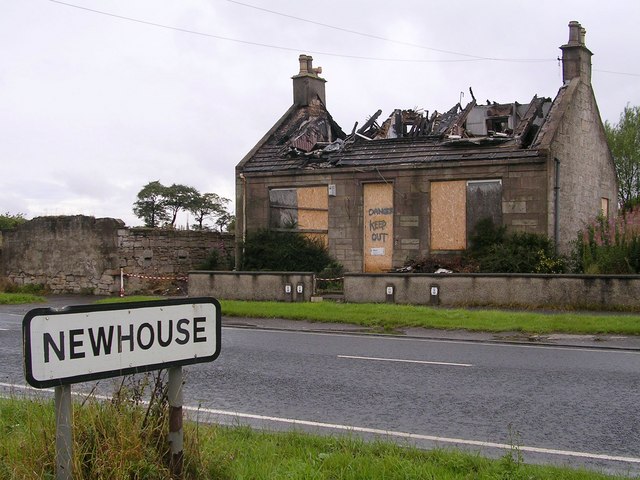
I often get asked by buyers if they should buy an older house or a newer house. My usual response is to say that it depends on what kind of problems they want to have. I get crazy looks when I say that, but it is just my way of telling them that all houses will have problems. If you don’t have one now, just wait because your newer house will become an older house quicker than you think. Basically, it is your house verses Mother Nature and Father Time……and those parents usually win.

I have lived in both older and newer houses all my life. When I was a kid, I went from a 1910ish four square to a 3-year-old ranch. Next, my parents bought a house in Kenwick  from the 1930s. My first house was built around 1915. My second was 1973. Then from 1997 and 1986, plus a collection of rentals built from the 1940s through 2006. All of them had things to deal with. 

There seems to be this misconception that old houses were built better. True, MOST were built with more care than today’s homes are. I say most because my first house, the one built around 1915, was nowhere near as well-built as my parent’s Kenwick house from the 1930s. I thought it would be, but once I moved in, I started to realize it wasn’t.

Old House misconception #2 has to do with today. Many people think that any older house is better than any newer house is today. After living in a lot of older houses and showing a bunch to my clients, I can tell you that what it comes down to is maintenance. Even the best built house from yesterday will be nothing but trouble today if somebody didn’t keep it up. Remember, an older house has been in the ring with Father Time for more rounds than a newer house will have.

Here are some of the common old house issues: Inadequate electrical, plumbing, insulation, lack of maintenance, and poorly done improvements to any of those prior items.

Newer house issues: Rushed construction by unskilled/uncaring workers sums it all up the best. I have a friend whose house was practically rebuilt after a fire. It had no insulation on one side of the house because the drywall contractors showed up before the insulation contractors were done. On my house from 1997, poor mortar joints on a brick window sill allowed water to run down the inside of the brick veneer and rot some of the sill plate. I only found it out when I did the demo for a new floor in 2010 when it was only a 13 year old house. If today’s workers would apply to their trade the same care they use to draw naked women in their potapotties, we would have the best built houses of all time!

Occasionally I do see both a really well-built newer home and a fantastic older home. I represented a builder who did a great job of making decisions that the buyer wouldn’t even begin to appreciate for years to come. He did a lot of little things way above minimum code. I also just sold an older house that had been well maintained and had recently been overhauled by a good contractor. That combination made it a pretty unique older home and a good pick…..I guess that buyer got the best of both worlds and none of the negatives!

Are Investors ruining the market?

Are real estate investors who buy single family homes ruining the market for other buyers and driving up rent?

Unpopular opinion, but I say no.

Sure, many of these investors might make terrible landlords. None of us like the robocalls we get asking to sell our houses to them…..but they are not ruining the market and driving up rent. I am by no means defending them or their actions. I am just saying that they are not the root of the problem.

I spent a couple weeks in Florida recently where I read an article saying how large scale investors were ruining the market. They were outbidding other buyers. They were reducing the number of homes available for owner-occupant buyers. They were raising the rent and making housing unaffordable.

This type of logic drives me crazy. Let me pick apart a few things here:

For every house for sale, that means there is both a Buyer and a Seller. If one Buyer is outbidding another, that means there are not enough houses for sale. This is a Supply and Demand issue. Also, the never mentioned seller who is about to become a buyer is happy with the terms they got.

Are they reducing the number of homes for sale? Yes, but isn’t the same true for anybody who buys an available home? Again, the issue is the imbalance between Supply and Demand.

Are they raising rent and making housing unaffordable? This one always amazes me. We have all just survived a crazy period of inflation where the cost of everything went up. Somehow most people single out housing, as if that shouldn’t have also been affected by inflation. Like we are shocked and appalled that housing costs, whether renting or buying, went crazy at the same time when everything else did too?

What this article seems to forget is the tenants. Where would they be if all the sudden there were no properties to rent? It isn’t like investors are buying these houses and keeping them empty. There is just as much demand for single family rental homes as there are for people wanting to buy them and live in them. If rent exceeds market demand, houses will sit vacant and investors will have to lower the rent to get a tenant. Again, Supply and Demand.

Are you seeing a theme here? Supply and Demand. There is a short supply of houses for sale for investors and owner-occupants. There is a short supply of houses for rent for those who cannot afford to buy or choose not to. Having more demand than supply is the problem here.

Some say that the issue is sellers just aren’t selling these days. Okay, true. But let’s think this through. We have far more people wanting to buy AND to rent houses. If all the sudden everybody decided to move, we would still have more people than houses because everybody living in their current house would also need another house. What’s that? Supply and Demand.

Building more homes is the only real solution to this. It is what the writers of the article I read should be encouraging if they honestly feel like everyone should be able to afford to buy or rent a home. The demand is there. The supply is the issue. Until there is a better balance, prices for buyers and tenants will not change.

Why Zillow is selling homes for less than they paid

This may not be news to you, but Zillow got into the business of flipping homes in several larger metro areas. They recently stopped buying houses and are selling many of their homes for less than they paid for them.

If you read headlines or even worse, get on YouTube, you could conclude that the market is about to crash and Zillow knows it.

I don’t think that is why they are selling their homes for less than they paid for most of them.

I think they overpaid for them in the first place.

Zillow’s paper thin profit margins on these flipped homes was based on their data. I have always said you can’t argue with data. Data is always correct all the time. The conclusions drawn from data is not always correct though.

Their data told them what a house should be worth and they paid that for it. While I don’t know exactly what data they use, I imagine it is very similar to the data an appraiser would use such as general condition, square footage, features, etc. Once you have all that, you look at what houses have sold within a radius or within the same neighborhood, make adjustments for hard data differences and then whatever number is at the end of the equation is their Zestimate of value.

What Artificial Intelligence and computer algorithms cannot tell you though is what a buyer will like or dislike about a house. It cannot tell you that buyers tend to not like a backyard that slopes uphill. That they usually don’t like a steep driveway. That there are two Ball Home floor plans all over the Bluegrass that are same size and one of them always sells for more money. That there can be a huge value difference between two identical floor plans within the same neighborhood just due to where it is within the neighborhood. All of these things are subjective.

Zillow has been telling the public that they don’t need a Realtor any more. All you need is them. Sounds to me like Zillow could have used the local expertise that only an experienced realtor can provide.