
Low interest rates could be the WORST thing to happen to the market

Yep. I know. It doesn’t make sense at first. How could these incredibly low interest rates possibly be a bad thing? They are a very good thing right now for people buying or refinancing their existing house. The problem is in the future.

Let’s take the average person who has probably refinanced their old mortgage recently. Let’s say they paid $160k for their 1700 square foot home in Masterson Station in 2013. They put 5% down on a conventional loan. Their interest rate was 3.875%, which seemed stupid low at the time since rates had been about 5% just a few years earlier. Their payment, excluding taxes, insurance and PMI, would have been about $714 a month. They decide they want to refi. Their house is now worth about $210k. They owe about $126k on their old mortgage. They get a 3% interest rate and now their payment is about $531. They are saving around $180 per month. They are happy.

Now lets look 5 years out from now. They want to move up to a $300k house. (Let’s keep the value of their current house and the one they want to buy based on today’s values since both should appreciate about the same….it just makes it easier for me to do the math!) They have close to $100k in equity, so they are effectively only going to finance an amount that is about equal to the value of their current house. This is really sounding good. But wait, maybe the interest rates are 5%? If so, their payment will more than double. That’s right. They have close to $100k down and are borrowing an amount equal to the current value of their existing home. Their new payment for principal and interest would be just over $1100 a month. People who need mortgages shop by their mortgage payment. They find out what they can afford per month and then figure out how much house it buys. These people won’t move. They will upgrade their existing house instead.

The same holds true for the people buying a house today. They won’t want to see their mortgage payment double if interest rates go up, so they will stay as long as they can stand it.

This is why, unless interest rates stay very low for a very long time, eventually there will be even fewer houses for sale. This will of course keep prices high since there will be less of a supply and demand will not decrease. We are not building enough new houses and the next generation of buyers will be bigger than previous generations.

So, what’s the take away here? If you can see yourself staying in your current house for 7-10 years, refi now. If you are a buyer, buy a house big enough to stay in for a long time. The last thing you want to do is outgrow your current house in 3-5 years and possibly not be able to afford a larger one.
How do houses go up in value?

Ever wonder HOW prices rise for houses?

Before I got into real estate, I didn’t really think about it. You’d read stuff like the average price went up something like 4.6% last year…I assumed it was like a rising tide and affected every house the same way at the same time.

But it doesn’t work like that. It works more like traffic taking off after a stop light. The first car goes, then the second car see the first car moving and goes, then the third car sees the second car moving and goes, and so on. As much as I wished they would all move at the exact same time, they don’t. And that is exactly how prices go up in real estate.

There are lots of factors impacting value: Supply/demand, location, price range, condition, etc. No surprise here, but when prices are going up, the neighborhoods that are the most desirable and have the least supply go up first. Once there is enough of a price gap between those neighborhoods and the next best neighborhood, the prices of the second best neighborhood start to rise as buyers see a bargain and move in that direction. Then when the prices are up on the second best neighborhood, that does two things: It makes the prices go up on the first choice neighborhood since it is better, and it also drives bargain shoppers to the third best neighborhood. This process ends up going through ALL the neighborhoods in town as long as the market remains hot.

I sold two houses in one particular neighborhood several years ago to some friends wanting to rent them out. I was telling my friends that I thought the prices in the neighborhood were about to go up since there was a big gap between what an identical house was selling for in other neighborhoods. Since I tend to Geek out on this type of stuff, I don’t think they were as into it as I was…..but now their houses are each worth $35-45k more in just a few short years.

So, next time you are stuck in traffic, forgive me if it makes you think of real estate.

When people pick the wrong house for the right reasons

It happens.  More than you’d think.

I showed a house about a month ago to a client.  There was a line to see it.  It got multiple offers that same day.

My client didn’t like it.  I didn’t like it.

Why?  The floor plan sucked.  It had a big two story foyer as soon as you walked in.  The living/dining/kitchen area was open.  All this sounds great, but the issue was that this was a 1733 square feet home that had no more usable space than a 1300 square foot home.  The upstairs hall was wide.  The hall from the front door to the living room was wide.  The dining area was small but nobody could tell since it was vacant.  All the rest of the rooms were equal to what you’d find in a 1300 square foot house.

It made a good first impression though.  You walk in that foyer and see space.  You walk down that wide hall and see the open living/dining/kitchen.  You go upstairs and see that wide hall.  The house felt bigger than it was just because when you are viewing a house, you are going through every room in about 15 minutes.

It sold for over $6k more than the list price.

It closed today.  The new owners are probably moving in and glad it quit raining.  Once they live there for a while, they will probably realize that much of their square footage isn’t usable.  They will realize that what they have is a 1300 square foot home with 400 extra square feet of hallways and foyer.

Floor plans to AVOID when buying a house

I can’t count how many houses I have been in over the past 15 years.  Old, new, affordable, expensive and just about every neighborhood in the Bluegrass.  Seen it.

One of my favorite things to do is watch how buyers react to several things, one of the biggest is the floor plan.

I think we don’t discuss the floor plan of houses often enough.  Sure, we think about whether it is open or traditional but there is more to it than that.  We usually just focus on the square footage.  For example, I will often have buyers get excited about a small house because it has a basement.  They will be excited because it is 2400 square feet.  Having shown several of these over the years, I like to remind buyers that yes, 2400 square feet is a lot of space, but that house is really a small starter home sitting on a finished basement.  1200 up and 1200 down.  The upstairs will always live like a starter home.  I tell them this because just about every buyer I’ve known has lost their enthusiasm once they see a house like this.

Floor plans can greatly affect the value in older neighborhoods like Chevy Chase or Kenwick.  I have seen far too many houses that sold for far less than similar sized houses that were finished equally.  When I go to list an older house, the first thing I do is assess the floor plan.  If it has lots of tiny rooms and much of the square footage is wasted in hallways, then I know it will sell for the lower end of the range for the neighborhood.  A lot of older houses must have been designed by builders or the first owner on a napkin.  You sometimes see some pretty odd things.  You also see some odd things done during remodels.  My parents house in Kenwick was built as a one bathroom house like pretty much all houses in the 1930s.  Somebody at some point thought adding a half bath in an upstairs hall closet was a good idea.  Since I lived upstairs, I can say that it was a good idea but it was very tight and very odd.  This was before you could go to IKEA and buy those super small sinks.  I just remember sucking in my gut to get past the sink.

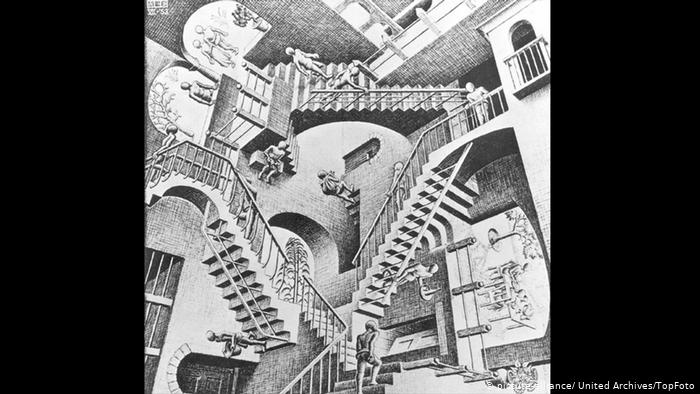
Even in newer houses there are a few things that buyers seem to not like.  I’ve shown some newer small ranch houses that have the living space on the back of the house.  You have to walk down a hall and literally find the living room, which doesn’t make a good first impression.  I have never sold one of these because a buyer just can’t get past that first impression, similar to split foyer houses where you have to decide immediately whether you are going up or down.  Buyers don’t like anxiety as soon as they open the door.  Also, a lot of the diagonal walls and plant shelves of the 1990s haven’t aged well.  They usually make a room feel small, furniture placement odd and make people feel like they are in an interactive M.C. Escher display.

escher

Another big negative is with houses that have a finished basement.  Most people want to use this space for kids to play or for large gatherings of people.  Lots of small rooms is a big negative.  A lot of times, these basements got finished to suit the needs of the owner, which may not be the same needs as the next potential owner.  When I have a client who will be finishing a basement, I ALWAYS tell them to have one big open room and to not make a maze of walls.  Just like those ranches with the hallway leading from the front of the house to the back, buyers want to walk down into the basement and see that big open room immediately.  They don’t want to get to the bottom of the stairs, turn and walk down a hall that leads to another hall or a small room that you must go through before getting to the main room.  It is best to mimic the upstairs floor plan, only make it more open.  You can put a spare bedroom under the dining room and a bathroom under the kitchen usually.  Be sure to leave a little space for storage too.

Something more important than location?

Yeah yeah yeah.  We’ve all been told by real estate professionals for years that the single most important thing when picking a house is it’s location.  I’m telling you right now that there is something even more critical than that.

Let me tell you a few things about location first.  It’s subjective.  People pick where they want to live for lots of reasons:  Proximity to main roads, their job, schools, parks, low crime, etc.  It’s always a compromise too.  One buyer may be willing to be far from parks if their kid can be in a better rated school.  Another buyer may be willing to put up with a higher crime rate if it is super close to their job…..so, one person’s great location may not be as great to other buyers.  Also, locations are sort of price dependent.  What is considered a good location for somebody with a $100k budget will definitely be a bad location for a $400k buyer.

What do ALL buyers have in common though when picking a house?  They all want as good of a lot as they can get.  In all 15 years of my career, I have never had somebody say they wanted a house that backed to a busy road, had a steep driveway, lacked privacy or had a backyard that was unusable due to a slope.

Why is the lot so important?  For starters, it is often a buyers first impression.  If a buyer tries to pull in the driveway and their car scrapes the pavement, bad sign.  If they are out of breath before they get to the front door, bad sign.  If they step out of their car and can hear New Circle Road or the Interstate that is behind the house, bad sign.  Additionally, the lot affects just about anything you do with the property.

What should you look for in a lot?

  1.  As flat as possible is the biggest thing around here.  Lexington is pretty flat.  The severely sloping lot is unusual here.  Go to Richmond or parts of Scott County and it is more common.  For what’s it is worth, nobody has ever told me they didn’t like a house I showed them because the lot was too flat.
  2. A nice view is always a plus.  If you can’t get a good view, then no view at all is safe.  We don’t have a lot of greenspace views and even fewer water views in Lexington.  It is totally okay to just have a flat backyard that backs to other houses.  I would avoid backing to anything than other houses, such as businesses, apartments or a road…..and ideally it backs to houses that are equal or higher in value than the one you’re viewing.
  3.  Get a lot size and shape that is normal for the neighborhood.  If you are looking at a house that has a tiny or oddly shaped lot unlike any other in the neighborhood, don’t buy it.  The same doesn’t always apply for lots that are bigger.  Most of the time the biggest lot in the neighborhood is the most desirable unless it is in a neighborhood where the most likely buyer will be a retiree or somebody downsizing to get away from a lot of maintenance.
  4.  I would avoid a corner lot if possible.  There are a few buyers who prefer a corner lot but most people view them as twice as much sidewalk to deal with.  Plus, most neighborhoods only allow you to fence a corner lot from the rear edge of the house, meaning that you have much less space if you want to fence it in.  (I’ve got a good friend who looooves his corner lot and will likely find out I said this…..sorry Peter!)

Want to know my absolute favorite thing about getting a good lot?  It never needs updating and never goes out of style.